
There was a time when marketing was all about intuition. You launched a campaign based on a gut feeling, printed flyers, ran ads on the radio or TV, and hoped for the best.
But that was the past.
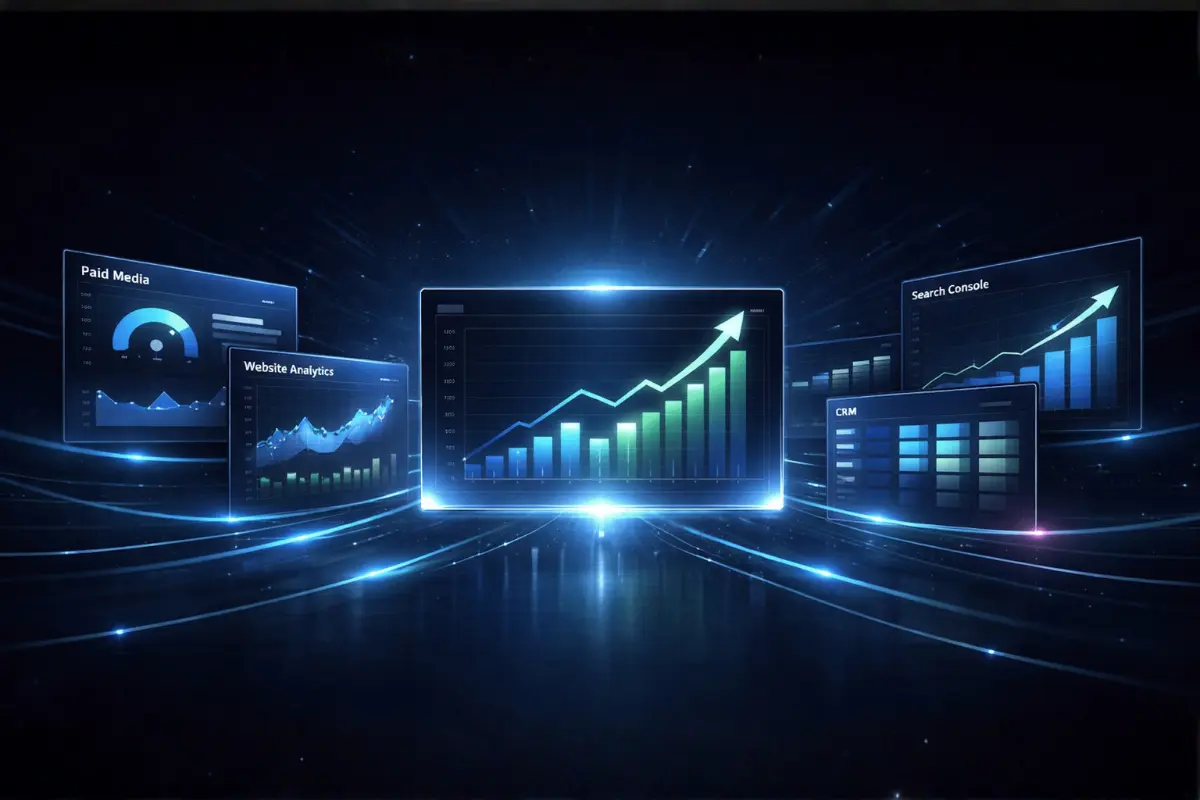
Today, every click, scroll, and swipe generates data. And data has become the most powerful currency in the world of marketing. From predicting buying behavior to personalizing customer journeys, data isn't just helpful; it's essential.
That's where data-driven marketing steps in.
It helps you move from "I think this will work" to "I know this is what's working."
So, what is a data-driven marketing strategy? Why does it matter in 2025? And how do you build one that drives results?
Let's check it out, step by step.
What Is Data-Driven Marketing?
The Evolution of Marketing
Before we go into data-driven marketing, let's acknowledge how the landscape has shifted:
- Reactive marketing waits for performance reports and adjusts late.
A modern data-driven marketing agency doesn't only analyze data, but they translate it into strategic business action. They help you move from lagging indicators to leading insights. This shift alone can transform how your brand performs across every channel.
With evolving customer journeys, privacy regulations, and omnichannel platforms, your business needs a robust data-driven marketing approach to compete and win.
At its core, data-driven marketing is the practice of using data insights to inform every decision you make, from content and channel selection to targeting, timing, and messaging.
Unlike traditional marketing, which often relies on intuition or past trends, data-driven marketing answers:
- Who is your audience?
When done right, it leads to better decisions, smarter campaigns, and higher ROI.
Think of it as marketing's GPS - guiding your every move with precision.
That's why brands now invest in data-driven marketing solutions to unify all data sources, turn insights into action, and build campaigns that scale.
Why Data-Driven Marketing Is No Longer Optional
If you're still relying solely on "what's worked in the past," you're already behind.
Here's why a data-driven marketing approach matters now more than ever:
- Consumers expect personalization. 80% say they're more likely to buy from a brand that offers personalized experiences.
In short? Data-driven marketing isn't a buzzword. It's your growth engine.
And in the B2B landscape, where buying cycles are long and complex, B2B data-driven marketing offers unmatched visibility across every touchpoint, from awareness to closed deals.
Types of Data Used in Data-Driven Marketing
Before we plunge into the strategy, let's understand the building blocks and types of marketing data you'll be working with:
The best strategies rely heavily on first-party and zero-party data; they're reliable, accurate, and privacy-compliant.
To streamline this, most companies rely on data-driven marketing solutions that can aggregate and clean all types of data into a single, usable customer profile.
How to Build a Data-Driven Marketing Strategy (Step-by-Step)
Whether you're a data-driven marketing agency, a startup founder, or a seasoned marketer, this guide works across industries and team sizes.
Step 1: Set Clear Business & Marketing Goals
Don't start with "We need more leads." That's vague.
Instead, ask:
- What's our revenue goal this quarter?
Example: "Increase MQLs by 30% from LinkedIn campaigns in Q4."
Now, your data has a direction.
Step 2: Map the Customer Journey (with Data)
Every touchpoint matters.
Your customer may go from Instagram → website → email → product page → abandoned cart → retargeting ad → purchase.
To map this:
- Use Google Analytics for on-site behavior
This is where multi-touch attribution becomes your best friend.
If you're in B2B data-driven marketing, map the buying committee: decision-makers, influencers, blockers.
Step 3: Centralize Your Data (Break the Silos)
Data scattered across tools is useless.
Use tools like:
- Segment or Snowflake for data pipelines
Integrate:
- Website behavior
Clean, consolidated data is the foundation of any great data-driven marketing strategy.
Top-performing data-driven marketers make this step a priority; they understand that bad data leads to bad decisions.
Step 4: Define Key Metrics That Matter
Let's ditch vanity metrics, shall we?
Focus on:
- CAC (Customer Acquisition Cost)
Tip: Your metrics should align with the funnel stage. Top-of-funnel gives you engagement, and bottom-of-funnel gives you conversion & LTV.
Step 5: Segment Your Audience Like a Pro
You're not talking to "everyone."
Segment by:
- Demographics (age, gender, location)
Why does it matter? Because a 45-year-old returning customer behaves very differently from a 21-year-old first-time browser.
And segmentation means personalization, which has higher conversions.
This is where data-driven marketing agencies shine; they craft micro-segments and personalize at scale.
Step 6: Turn Data Into Personalized Campaigns
Once you know who you're talking to, tailor:
- Subject lines
Example: A data-driven marketing agency might send industry-specific content to finance clients and case studies to healthcare leads.
Use automation platforms like Klaviyo, HubSpot, or ActiveCampaign to do this at scale.
Step 7: Test, Track, and Iterate
This is where many brands fail.
You don't just "set and forget."
You:
- A/B test headlines, CTAs, and images
Pro Tip: Don't just test for the sake of testing; use data-driven marketing insights to inform what to test and why.
Step 8: Use Predictive Analytics to Forecast & Scale
Now that you've collected behavior data, use it to:
- Predict churn
This is advanced, but ground-breaking.
If your team lacks the bandwidth, this is where a data-driven marketing agency can do the heavy lifting with AI models and dashboards.
Step 9: Automate Where It Makes Sense
Once you find patterns, automate:
- Welcome flows
But don't just automate for efficiency, automate for impact.
Every automated touchpoint should feel personal and intentional.
That's the hallmark of skilled data-driven marketers.
The Role of Tools and Platforms in Execution
Today's marketers rely on intelligent platforms that offer:
- Real-time analytics dashboards
These platforms make it easier to run scalable data-driven marketing solutions without needing a team of data scientists. The right tools help marketers:
- Visualize high-intent actions
Even more, they empower small and mid-sized businesses to operate with the precision of enterprise-level teams.
Common Mistakes to Avoid
Even seasoned marketers fall into these traps:
- Drowning in data, doing nothing with it ➤ Solution: Focus on actionable insights, not collecting everything.
Framework: The D.A.T.A. Model
A simple way to remember the flow of data-driven marketing:
Use this framework when building campaigns or explaining the strategy to stakeholders.
Learning from Data-Driven Success Stories
Across industries, from SaaS to retail to B2B services, brands that lean into data consistently outperform those that don't.
Mini Case Study: How "Bloom Botanicals" Grew 3X with Data
Industry: Organic Skincare (D2C)
Problem: High CAC, low repeat purchases
Solution:
- Integrated website + CRM + email data
Results:
- CAC dropped by 23%
This is the power of a data-driven marketing solution in action.
Another Example: A B2B SaaS company partnered with a data-driven marketing agency to unify disconnected CRM and marketing data. Within three months:
- MQL quality improved by 38%
Why? Because they didn't just collect data, they turned it into decisions.
For businesses aiming for sustainable, scalable growth, adopting data-driven marketing solutions is no longer optional. It's the difference between surviving and thriving.
Why Partnering With a Data-Driven Marketing Agency Makes Sense
If you're overwhelmed by:
- Tools
…an expert partner can help you skip the learning curve.
A good data-driven marketing agency will:
- Help you consolidate and clean data
And most importantly, tie every effort to ROI.
You don't need more tools. Or more dashboards.
You need a strategy that turns data into action. Into growth. Into confidence.
Data-driven marketing is not about "big data." It's about smart decisions.
Whether you're a startup or an enterprise, it's time to equip your team with powerful data-driven marketing solutions that can scale with you.
So if you're done with guesswork, if you're ready to stop gambling with your marketing budget and start scaling with certainty…
It's time to go data-driven.
What You've Learned
- Data-driven marketing helps you personalize, optimize, and grow faster.
Need help creating a data-driven marketing system that drives real results?
We're Express Analytics, a data-driven marketing partner trusted by global brands to turn numbers into narrative and data into direction.
Book a free consultation today.
Let's transform your marketing from guessing… to knowing.
Ready to Transform Your Marketing?
Get expert guidance on building a data-driven marketing strategy that delivers measurable results.